| Non Stirred Pressure Vessels |
| |
 |
| |
|
| Applications : |
| |
|

|
| » |
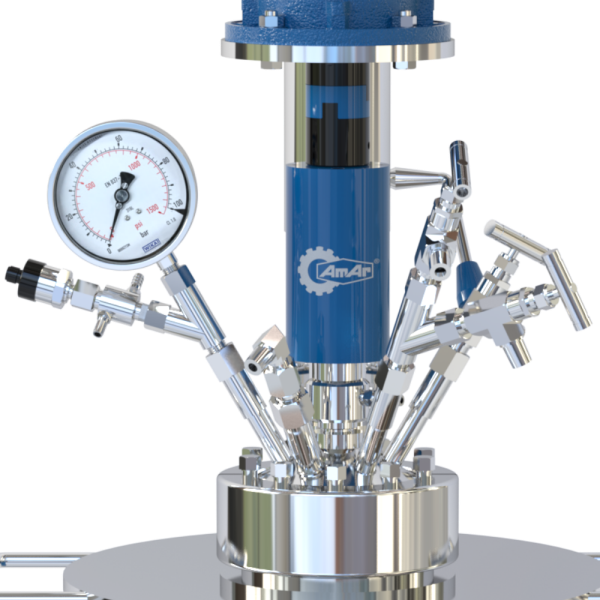
It can be used as a gas/ liquid storage pressure pot (for pressure higher than 1500psi, where fabricated pot is not desired) to charge liquid/ gas in the autoclave/ other pressure vessel at higher pressure. |
| » |
Can be used for supercritical CO2 solvent extraction system upto 350 bar pressure. |
|
|
| |
|
 |
They are used for dissolving or digesting inorganic or organic samples in strong acids or alkalis in chemically resistant teflon-lined vessels & lid at high temperature & pressures with complete containment & recovery. They have no valves, nozzles, fittings or pressure gauge except a rupture disc.
| Sizes |
: |
25ml to 250ml |
| Max. working Pressure |
: |
100 bar |
|
| |
|
| |
| Supercritical Fluid, CO2 Solvent Extraction System |
|
 |
Extraction of natural products in chemical, pharma & food industries.
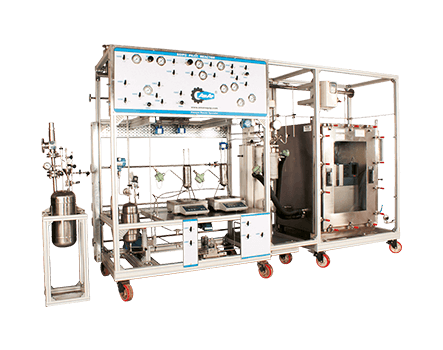
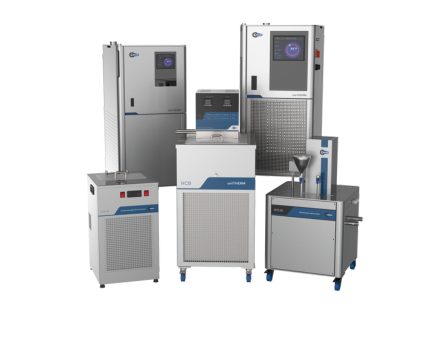
These system consists of stirred autoclave or a non-standard pressure vessel. Liquid CO2 is charged into it through a booster or a plunger pump. CO2 is maintained at low temperature to keep it in liquid stage at lower pressure by providing a heat exchanger before the pump. Suitable Cryostat bath is used to maintain low temperature of CO2. PC operated complete automated system can be offered.
| Sizes |
: |
1L-100L |
| Max. working Pressure |
: |
200/350 bar |
| Max. temp |
: |
upto 500 °C |
| MOC |
: |
SS316, Monel, Hastelloy, Inconel, Titanium etc. |
|
|
| |
| High Pressure Vessel System for Hydrogen Induced Disbonding Tests |
|

 |
Amar has manufactured & supplied system for Hydrogen Induced Disbanding (HID) tests as per ASTM G146. These tests are used to stimulate & study the effects of hydrogen environment under very high pressures from 150 – 250 bar & temperatures from 400 - 500°C on bimetallic plates that are to be used under similar conditions in refinery. The results would give the resistance of bimetallic steels & its alloy to hydrogen induced disbonding.
Thus such tests can be used to decide the material metallurgy, its heat treatment, and manufacturing & fabrication technology for use in refineries in similar environments. The system can be manually operated or optionally completely automated. Initially the test samples are put inside the vessel & with hydrogen to very high pressure upto 150 – 200 bar & then heated to desired temperature of around 400 - 500°C for a period of around 48 hrs. After the test is over, the vessel is cooled at a pre-defined rate of around 150°C /hr. till the temperature reaches 200°C. The vessel pressure is then released completely & cooled further to remove the test samples..
| Technical Specifications |
| Sizes |
: |
1L, 2L, 5L |
| MOC |
: |
SS316, Inconel 600, Hastelloy C276 |
| Design Pressure |
: |
200 bar/350 bar |
| Design temperature |
: |
500°C |
| Standard Fittings |
: |
Pressure gauge, Safety Rupture Disc, Vent Valve, Thermowell with temperature sensor, gas inlet valve & manual back pressure regulator. |
| Heater |
: |
Electric Ceramic band heater with insulation. |
| Control Panel |
: |
Temperature control panel with vessel & heater cascade temperature control & high temperature alarm system. |
| Optional |
: |
Forward Pressure Regulator, Gas boosters for H2 & N2 gas, automated back pressure regulator, internal cooling coil with autocooling system, automatic pressure control valves, complete automated system with scada software. |
|
|
| |
| Autoclaves for Corrosion Testing |
| Autoclaves for corrosion application are mainly used in aggressive environments like H2S & supercritical waters. |
| |
| Static & Stirred Autoclave |
| Normally corrosion test coupons are suspended in static (non-stirred) or stirred autoclave systems & corrosion is measured in terms of weight loss. In stirred autoclave system, sometimes the coupon holders are attached to the shaft & rotated during the testing. Autoclaves are then fed with the corrosive media & designed temperature & pressure are raised & maintained in the autoclaves. Optionally suitable electrodes like pH or ORP (MOC: SS316 / Hast-C) are provided to measure the pH & redox potential under pressure. Autoclaves with working, counter / reference & auxillary electrodes can also be offered |
 |
| |
| Re-circulating Loop Autoclaves for Corrosion Testing |
|
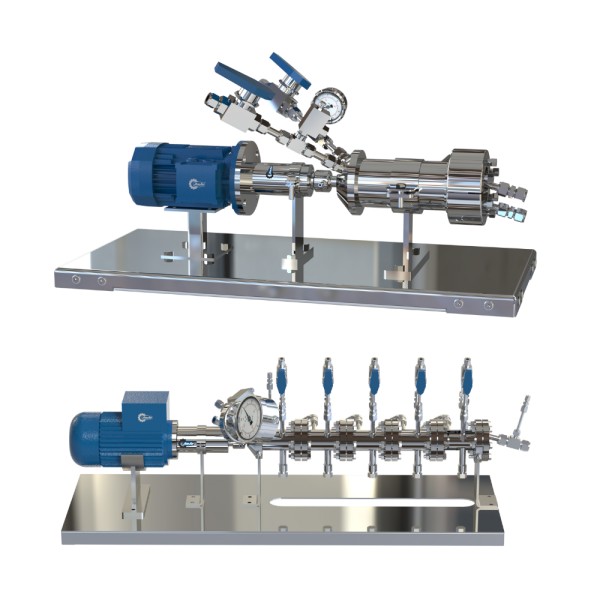
In this system, the autoclave is connected with a special high pressure pump which can re-circulate water/liquid continuously at very high velocity through the test spool & the autoclave connected in line.
| Sizes |
: |
400 ml - 25 ltr |
| Max. design pressure |
: |
100 / 200 / 350 bar |
| Max. temp |
: |
500 °C |
| MOC |
: |
SS316, Hastelloy-C276, Titanium, Inconel 600 etc. |
|
|
| |
|
| |
 |
| Top |
|