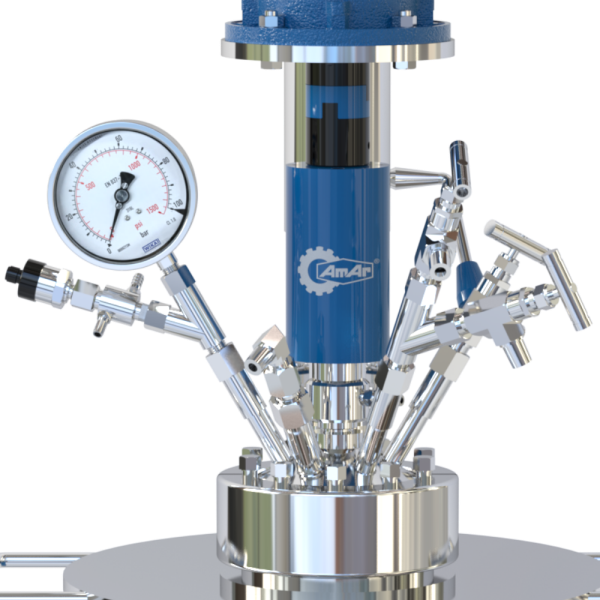
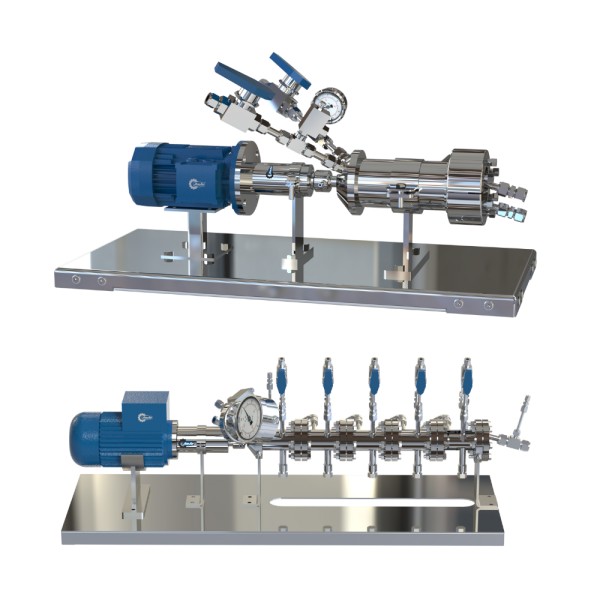
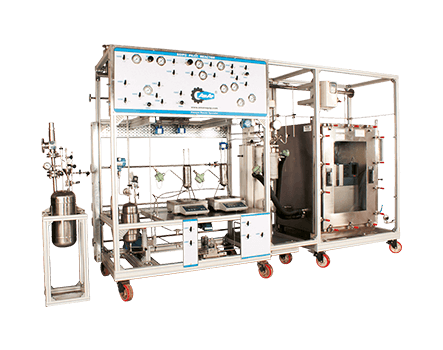
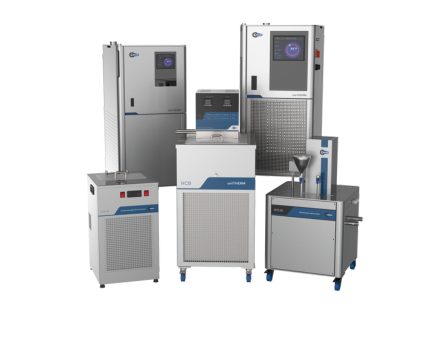
Our Gas Hydrate Formation – HPHT Experimental Systems are advanced high-pressure research platforms designed to study gas hydrate formation under controlled laboratory and pilot-scale conditions. These precision autoclave systems simulate realistic subsea and pipeline environments by accurately controlling pressure, temperature, gas composition, and agitation, enabling detailed investigation of hydrate thermodynamics and kinetics. The systems support gases such as methane, ethane, CO₂, and natural gas mixtures interacting with water to form hydrates. Equipped with gas-inducing impellers, jacketed vessels for heating and cooling, and automated data acquisition, these reactors allow researchers to observe hydrate nucleation, growth, and dissociation. Amar’s gas hydrate formation systems are widely used for flow assurance research, inhibitor screening, and hydrate management studies in the oil and gas industry.
Gas hydrates are crystalline, ice-like solids formed when gas molecules become trapped within cages of water molecules under specific temperature and pressure conditions. This phenomenon is known as gas hydrate formation and typically occurs when gases such as methane, ethane, CO₂, or natural gas mixtures interact with water at high pressure and low temperature.
Gas hydrates are commonly found in deep ocean sediments and permafrost regions. In industrial environments, particularly oil and gas pipelines, uncontrolled gas hydrate formation can cause blockages and flow disruptions. As a result, understanding the formation and dissociation of gas hydrates is essential for safe and efficient hydrocarbon transportation.
A Gas Hydrate Formation HPHT system is a high-pressure experimental reactor designed to study the thermodynamic and kinetic behavior of hydrates under controlled conditions. The system replicates real pipeline or subsea environments by controlling key parameters such as temperature, pressure, gas composition, and agitation.
Inside the reactor, hydrate-forming gases are contacted with water under elevated pressure and controlled cooling. The system allows researchers to observe gas hydrate formation, nucleation, growth, and dissociation, providing valuable insights into hydrate behavior and stability.
Understanding gas hydrate formation is critical for maintaining safe and reliable hydrocarbon transportation systems. Hydrate formation in pipelines can lead to blockages, pressure buildup, and operational risks in offshore and subsea production systems.
Research using gas hydrate formation reactors helps engineers:
These studies support the design of safer production systems and improve operational efficiency in oil and gas infrastructure.
Gas hydrate formation experiments commonly involve gases that naturally form hydrates under pipeline conditions. Typical gases studied include:
By controlling the gas composition and experimental conditions, researchers can evaluate hydrate stability, formation rates, and the effectiveness of inhibitors used to prevent hydrate formation in real pipeline systems.
Gas hydrate formation systems are widely used in both academic and industrial research to study hydrate behavior and evaluate mitigation strategies. Typical applications include:
These systems provide reliable experimental data that supports flow assurance, pipeline design, and energy research involving gas hydrate formation.