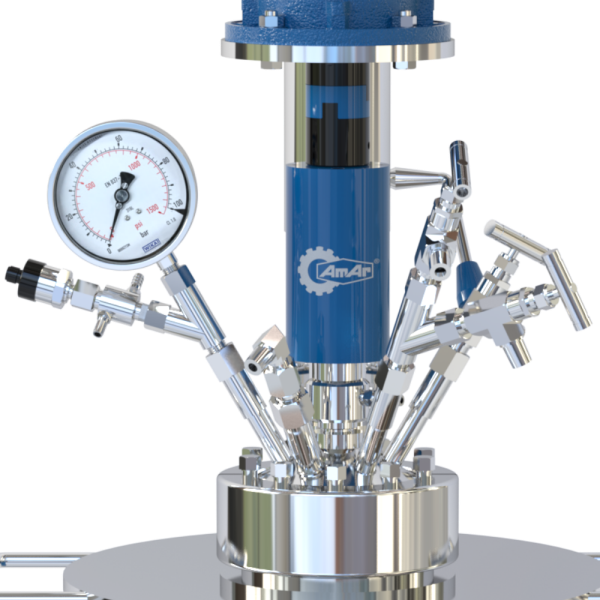
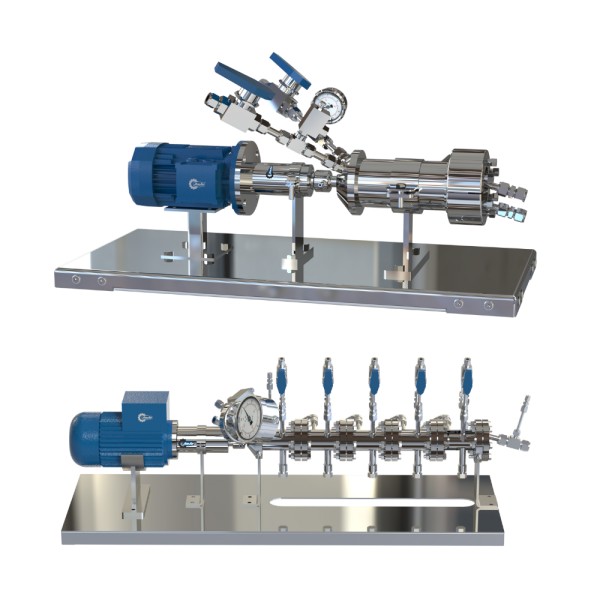
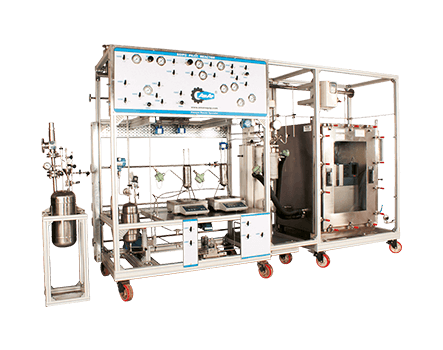
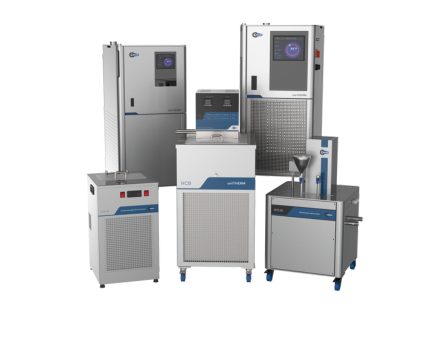
Our Autoclaves are also used for HPHT(High pressure High Temperature) Corrosion Testing Systems. It is a precision-engineered high-pressure reactor designed to evaluate material corrosion behaviour under extreme industrial environments. The corrosion studies autoclave enables researchers to simulate realistic service conditions such as high temperature, high pressure, and exposure to corrosive media including CO₂, H₂S, brines, acids, and hydrocarbons. By accurately controlling temperature, pressure, and chemical composition, the system allows detailed investigation of corrosion mechanisms, inhibitor effectiveness, and material compatibility. Built to international pressure vessel standards, Amar’s corrosion studies autoclave supports laboratory and pilot-scale corrosion testing for industries including oil and gas, petrochemicals, power generation, and materials research.
A corrosion studies autoclave is a high-pressure experimental reactor used to evaluate how metals and alloys behave in aggressive chemical environments. The system recreates real industrial conditions by exposing test samples to corrosive fluids or gases under controlled temperature and pressure.
Engineers and researchers use a corrosion studies autoclave to determine corrosion rates, study material degradation mechanisms, and evaluate the effectiveness of corrosion inhibitors. These studies help industries select suitable materials and design safer equipment for demanding environments such as pipelines, reactors, and downhole systems.
A corrosion studies autoclave works by placing material samples inside a sealed high-pressure vessel filled with a selected corrosive medium such as brine, acids, hydrocarbons, or gases like CO₂ and H₂S.
Once sealed, the reactor is pressurized and heated to the desired conditions to simulate real service environments. Over time, corrosion occurs on the test samples. Researchers then analyze the materials using techniques such as weight-loss measurement, surface morphology analysis, or electrochemical monitoring to determine corrosion rates and mechanisms.
The corrosion studies autoclave is constructed as a high-strength pressure vessel capable of safely operating under extreme conditions. The reactor is typically fabricated using corrosion-resistant materials such as SS316, Hastelloy, Inconel, or Titanium, depending on the testing environment.
Each vessel is designed according to international pressure vessel standards such as ASME Section VIII or PED, ensuring structural integrity and safety. The system includes instrumentation for pressure and temperature monitoring, safety features like rupture discs and relief valves, and precision sealing systems to maintain leak-tight operation during long-duration corrosion experiments.
A corrosion studies autoclave can replicate a wide range of industrial corrosion environments by controlling the chemical media, temperature, and pressure conditions inside the reactor. Typical test environments include:
These capabilities allow researchers to evaluate material performance under realistic service conditions before deployment in industrial systems.
The corrosion studies autoclave is widely used in industries where materials must withstand aggressive operating environments. Key sectors include:
These systems provide critical data that helps engineers improve material selection, develop corrosion protection strategies, and extend the service life of industrial equipment.