04 May 2026

When development work depends on repeated trial runs, speed often comes down to one simple question: how many useful experiments can you run at the same time?
In process development, waiting for one experiment to finish before starting the next can slow progress more than the chemistry itself. Teams often need to compare temperatures, pressures, catalysts, solvents, residence times, or agitation settings before moving forward with confidence. Running those checks one by one takes time, effort, and repeated setup work.
That is where Amar Equip's multiple reactors become valuable. Instead of testing one condition after another, they allow several experiments to run side by side under controlled conditions. This makes comparisons easier and helps researchers learn faster from each testing cycle.
For R&D teams, this means that process development can become more structured and less reliant on slow trial-and-error. Used well, parallel reactors and parallel synthesizers help speed up screening, improve data quality, and support earlier decisions on optimization and scale-up.
A single-reactor setup is useful, but it creates a natural bottleneck when many variables need to be studied. Each change in condition requires a fresh run. Each repeat adds more time. Even small comparisons can stretch out when the work has to be done in sequence.
That delay usually comes from more than reaction time alone:
The main advantage is the ability to test multiple conditions within the same timeframe.
Here is where the time advantage becomes clear:
| Development task | Single-reactor approach | Parallel approach |
|---|---|---|
| Screening reaction conditions | One run at a time | Several runs together |
| Comparing catalysts or solvents | Slower comparison | Faster side-by-side comparison |
| Identifying promising windows | Needs more cycles | Reached earlier |
| Using operator time | More repeated handling | Better use of lab time |
This is why high-throughput screening has become so useful in modern development work. When several independently controlled runs can run together, teams can reduce wasted time and reach the next decision sooner. Automation and parallel synthesis can improve discovery, optimisation, and the early stages of scale-up by enabling simultaneous testing of multiple conditions.
Not every project needs the same development path, but parallel reactors are especially helpful for comparison-heavy processes.
Common examples include:
In these situations, the speed gain is not only about running more experiments. It is also about getting cleaner, more comparable data from conditions tested within the same campaign.
Why High Throughput Screening Supports Better Decisions?
Speed matters, but speed alone is not enough. Development improves only when the extra runs yield results that are easier to interpret and act on.
Before selecting a system, it helps to look beyond the idea of parallel testing itself. The setup should match the real development needs.
Check these points first:
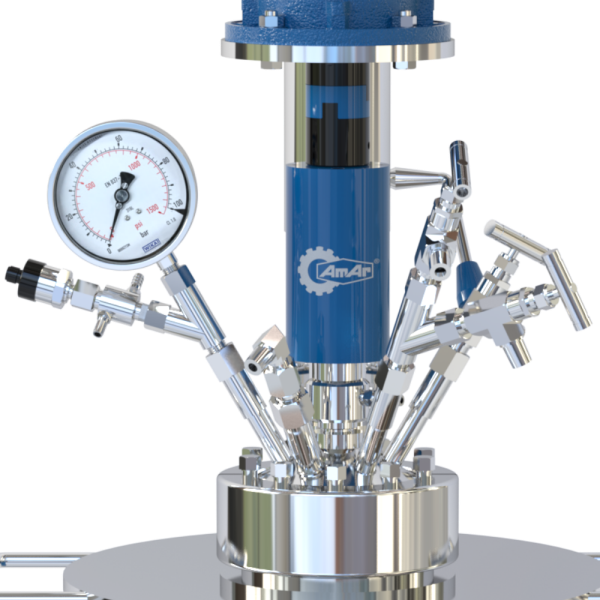
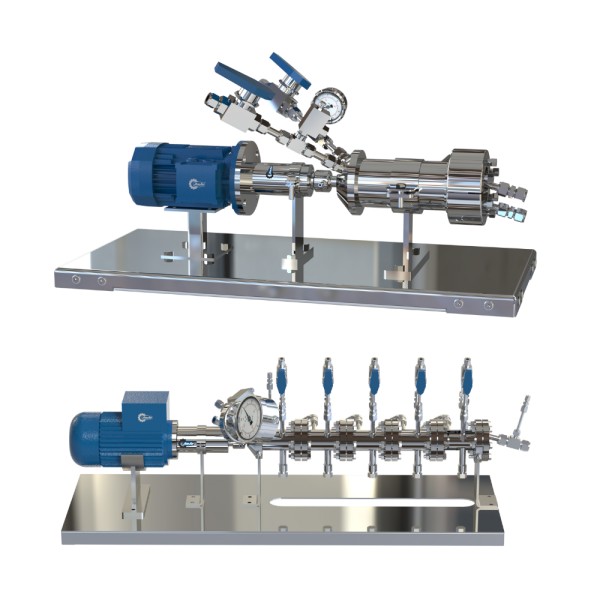
Amar’s parallel synthesizer range is designed for lab and pilot development work. It is available with 4 or 6 parallel reactors with overhead stirring and supports working volumes from 100 mL to 2 L, with operating capability up to 350 bar and 500°C for each reactor.
The range also offers material options such as SS316, Hastelloy, Inconel, Monel, Titanium, and Tantalum lined, along with full automation through SCADA software. These details matter because the right system should not only run more experiments. It should generate results that are more actionable for the next stage of development.
Process development moves faster when experiments are not forced into a one-by-one workflow. Running conditions in parallel helps teams compare more, learn sooner, and reduce the time spent between decisions.
With over 50 years of engineering experience, Amar Equip has built a strong foundation in pressure- and flow-reactor systems since 1974. Today, as a family-operated, second-generation company, we also offer ISO 9001:2015 certification and project capabilities, including CE-PED, ASME U Stamp, Ex-proof, and ATEX-related compliance support.
For development teams, the value of parallel systems lies in faster learning. Our parallel synthesizers help reduce waiting time between experiments, improve side-by-side evaluation, and support a more efficient path from screening to process refinement.
If you are looking to accelerate process development with a system built around your chemistry and operating needs, we can help you find the right setup.